Showing posts with label Island. Show all posts

Wednesday, June 28, 2017

Island of Ometepe

This month we had the chance of going to visit Ometepe Island, which is really not far at all from Tola. In fact, from some parts of town one can see the principal volcano on the island, Volcan Concepcion.

Jean and I along with my sister and her family went together, cramming 6 of us in a small car. Our trip started early in the morning as we left from Tola for the port of San Jorge near Rivas. I was really surprised to see how different the transportation systems are here on the Pacific than on the Atlantic coast of Nicaragua, and felt a bit sad for the people on Corn Island and what they have to put up with.

To get to Ometepe, one can take a ferry from San Jorge. There are several different boats run by different businesses that travel several times every day, usually once in the morning and once in the afternoon. The boats are very large and also comfortable and well maintained. You can also take your car, so we hopped out just before my brother in law drove onto the ship, where he was told to cram it into the corner so tightly the doors wouldn't open, so he had to get out of the passengers side door.

El Rey

Deck 4
The boat we went on was called "El Rey" or "The King" in English, which we read in some places was the nicer of the boats, and it certainly was a nice one. There are 4 decks, the top being open air with benches, and the other floors having more comfortable padded seats and tables, but being closed in by windows. The lower deck also had a small store selling phone credit as well as snacks. The trip to the Island takes about one hour, and is generally very calm as it is across a lake rather than the ocean.

Deck 3
The trip costed about 50 Cordobas per person, and as we came into view of Ometepe we had some breathtaking views of the two volcanoes that make up the island.


Jean giving me attitude

What stood out about the Island the moment we arrived was how lush and green it is. It is the rainy season, and its true that all of Nicaragua is relatively lush and green. But something about Ometepe takes it to another level. Not only are there a lot of trees but they are also huge. Perhaps it is due to the local government's strict rules on protecting the islands ecology, or maybe because of the rich volcanic soil. Whatever the case, this place is intensely green, and everywhere you go you are overwhelmed by the majestic view of the enormous volcanoes. I really had no idea of how big they were until we got closer. For perspective, the larger volcano was even visible from our balcony in Jinotepe.


Jean has always been a bit nervous about volcanoes, talking about stories she always heard about Mt. Vesuvius and Pompeii. I kept reassuring her that although Concepcion (the bigger one) is indeed active, its not "that kind of volcano". To reassure her further that it was safe I did some research on volcanoes, different types, and the history of concepcion. To my surprise, Concepcion IS in fact "that kind" of volcano. According to wikipedia it is a "stratovolcano", some famous stratovolcanoes are Mt. Saint Helens and Mt. Vesuvius... And Concepcion's last major lava spewing eruption was in 2015...

Anyways... Ometepe is pretty. We stayed at a hotel on the eastern coast of the Island, between the two volcanoes. On one of the days of our trip we went to visit a really amazing place called "Ojo de Agua" which means "Eye of water". It is a naturally occurring spring reinforced into a swimming area in the middle of the jungle. Despite being a popular tourist destination it was very quite and peaceful. There is a well equipped restaurant up the hill and vendors by the water serving rum inside coconuts.


Another highlight of the trip was when we went horseback riding up to a waterfall on Volcan Maderas, which is definitely not "that kind" of volcano. It is in fact, extinct and has a lake in the crater. For our horseback tour we went down the town of Merida on the south west side of the Island. Along the way we met some of the witnesses who were out in the ministry, completely at random as they were walking along the dirt road in the forest, Coincidentally we knew one of the couples as they were old friends of Jean's from Bluefields. There are 6 congregations on the Island of Ometepe despite its relatively low population.

We understood that it would be a 2 hour ride on horseback to a waterfall. We weren't sure if we were going up the volcano very far, we imagined not because it would be a really long distance. As it turned out we were confused, the ride was 5 hours and we were climbing the volcano on horseback. The waterfall was right at the point where the volcano pokes into the clouds. 1 hour in we were already feeling sore, none of us having any experience with horses. Once we started to climb the views were spectacular. The road narrowed into a rocky path through the rainforests which blanket the bottom of the Maderas Volcano. As we got higher the bush became more and more dense, we heard and saw howler monkeys and many other exotic animals and birds. According to the information we had, at certain altitudes Maderas changes from rainforest to cloud forest. What this means is that because of the extreme humidity and cooler temperatures brought by the clouds the plant species in the area are completely different. By the time we reached this point we were a little light headed, and it was time to get off the horses and climb the rest of the way. The plants were absolutely enormous. There were ferns with branches the size of a house hanging from cliff sides overhead. the white haze of the lower fringes of the clouds drifted across the pathway. despite exhaustion and some dizzyness we made it to the waterfall. Words really can't describe the place, but the cool mist spraying off the fall was very refreshing.


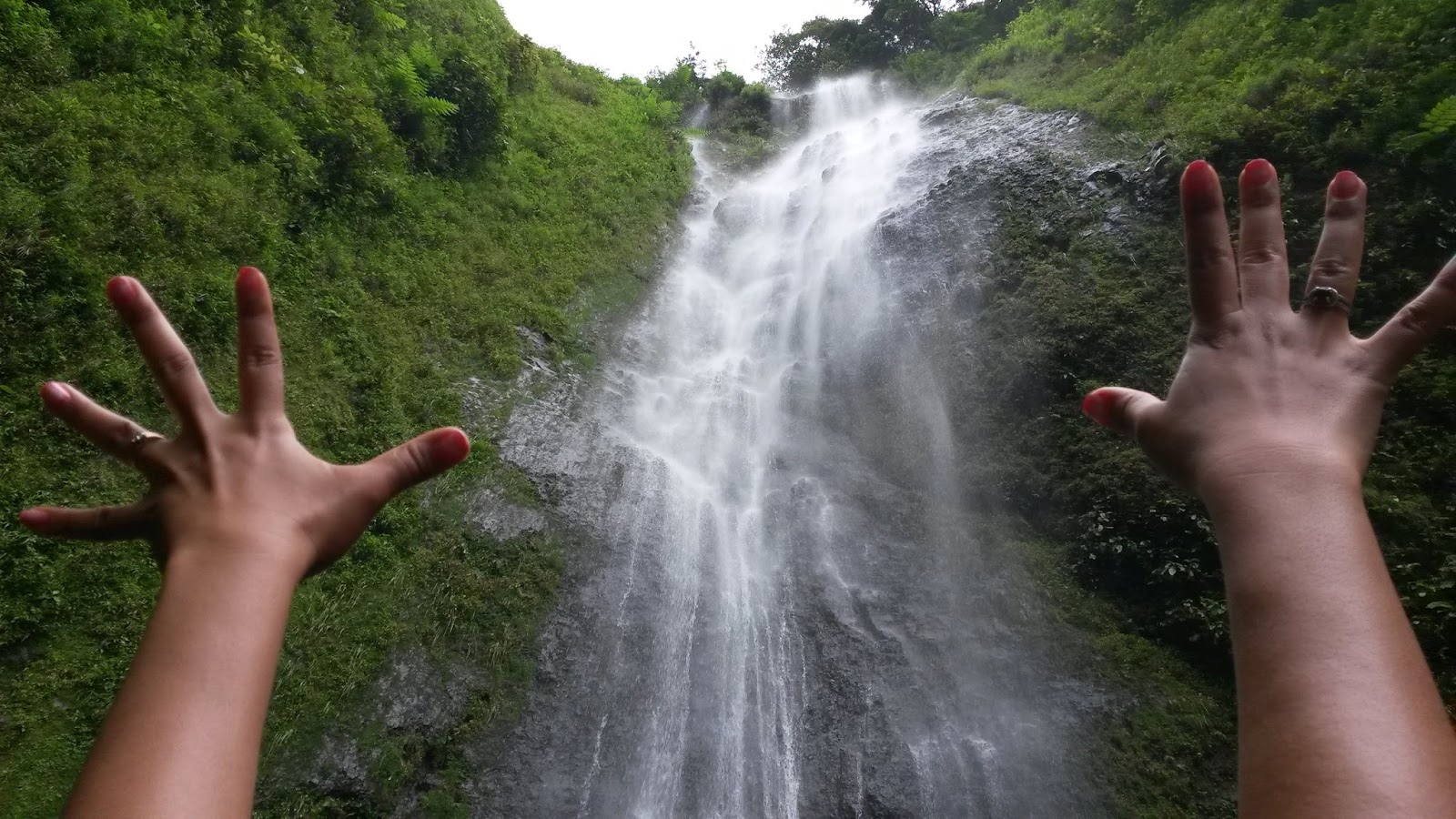


The way back was less exhausting as the horses were a bit tired and didn't feel like going so fast. Except for the part when they realized they were going home and decided to gallop at full speed. Its been about a week now and my blisters from the saddle are just starting to heal. For a couple of days all of us had problems walking, but it was worth it.

I really liked Ometepe. Too much in fact. It has made me realize that I have a problematic addiction to exploring new places. When I go to a new place, I tend to like it so much and be so excited about it that I have a burning desire to go and live there. We JUST moved to Tola and that is just not an option, and theres no really good reason to do it either. The congregation needs us here, plus it was a lot of work to move all our crap. So, definitely not moving to Ometepe. Even though part of me wants to. Being on an Island again brought back a lot of nice memories from our year on Corn Island. We're looking forward to the next time we can go back there, maybe this time I'll actually have the money to get a diving licence.

Friday, November 18, 2016

Atlantic and Pacific

Its often said that there are two sides of Nicaragua. The yearbook even called the Atlantic coast "The Other Nicaragua" highlighting the vast cultural differences between the two sides of the country. Having lived in both sides now we have experienced this first hand and can really confirm that it is true. The east side of Nicaragua, divided into two departments: Region Autonomio Costa Caribe Norte, or "R.A.C.C.N." and Region Autonomio Costa Caribe Sur, or "R.A.C.C.S." These when translated basically mean "North carribbean coast autonomous region" and likewise as the south. Many maps still show the old name of these departments: RAAN and RAAS, however this was recently changed likely due to RAAS being uncomfortably close to a curse word in the local Creole language.


Many people in the Atlantic regions still speak Spanish, however many do not speak it as their first language. Some speak either Creole which is a dialect of English, or Miskito which is an indigenous language of its own. Economically the Atlantic coast is far behind the Pacific. Many in the Pacific believe that people from the Atlantic coast are wealthy because the cost of living is higher, but the opposite is true, wages are generally lower while cost of living is higher. Having just moved to Jinotepe, Carazo we have found that prices of everyday household items like soap, as well as food are generally twice as expensive on the Atlantic coast, becoming more expensive the further east you go. Corn Island and Pearl Lagoon being the most expensive. This seems to be in part due to the lack of transportation. The highway stops at Rama, and any travel beyond there must be done by boat, or if you're brave by dirt (mud) roads. Another reason for the prices likely is the lack of competition, there are very few shops and no supermarkets besides the ones in Rama and Bluefields, so if someone is selling anything from the pacific they can charge any price they want even for basic necessities.

On the Pacific side of Nicaragua, first of all there's a lot more people. According to some sources 5% of the population lives in the two Atlantic Regions, and 95% in the Pacific. The Pacific is divided into many departments, all of which I have yet to memorize. We live in Carazo, other well known departments are Rivas, Granada, Masaya... names you have likely heard of. There is more business over here and many cities as well. Cost of living over here is generally 50% of what it is on the Atlantic side, although tourist areas may cost many times more. We pay a little bit more for rent over here, but that comes with conveniences that are hard to get in the Atlantic, such as wifi and hot water. We can even drink from the tap in Jinotepe, something we wouldn't even dream of doing in Pearl Lagoon.

Grocery store in Jinotepe

Tourism has a much bigger impact on the Pacific side as well. On Corn Island (RACCS) tourism is only beginning, and any tourists found in Pearl Lagoon are either hard-core adventurers or hopelessly lost. San Juan Del Sur on the other hand, in the Rivas department of the pacific has a lot more in common with tourist hotspots like Cancun or Hawaii. many things are priced according to "If you have to ask, you can't afford it". Rental apartments or houses in SJDS are rare, as most opt to rent on a per-night basis and are unlikely to agree to long term. Other communities away from the beach are quite different however and rent can be very cheap. Although the Pacific coast may be more popular with tourists, the Atlantic has natural beauty that is beyond compare, just lacking in accessibility.

Sunset in San Juan Del Sur


Crystal clear water of Corn Island


Architecture on the Pacific side resembles the rest of Latin America. Cities are made up of blocks laid out on a grid, and the buildings in each block are built with their exterior wall immediately on the sidewalk, and their interior walls connected to each other, making the entire block resemble one large building.

San Marcos

In the Atlantic however, houses are well spaced out and disconnected from each other. In fact, in smaller communities the houses may not even be built near a street, but rather be behind another house or simply standing on its own.

Haulover

These are just a few of my observations, but it really feels like two countries in one, and if you spend any time in Nicaragua its definitely worth going to the other side to get the full experience.

Tuesday, May 10, 2016

Camping Little Corn

Over the last few months we have done our best to keep up with the meetings and trips to Little Corn every two weeks. Seeing as the pangas leave at 10 in the morning, and we have to return at the mercy of the cargo ship it often leaves us little time to accomplish our work there. So we decided this time to do something a little similar to Pearl Lagoon congregation.

Interior of Little Corn
We decided that this time we would spend the night, and spend the following day following up on return visits and bible students. This sounds very simple, there are a lot of hotels here and restaurants as well. However many of us simply cannot afford to stay in them, and most of the restaurants are not exactly economical either. So we decided we would camp out, and cook our own meals over an open fire. We didn't know where we would be spending the night when we arrived on the Island. Our plan was to just get there with our supplies and see what happened. We checked out a few locations, realistically we probably would have been fine just hiking some distance into the bush and camping there, but we felt it might be safer and more convenient to camp on someone's property that we knew. So we asked one of the bible students we had on Saturday if we could use his land to set up camp, and he was very agreeable to the idea. He even offered to let us use his kitchen, and offered us coffee in the morning, however we were actually looking forward to cooking on the fire so we carried on with our original plan regardless.

Campsite

Supper time

Both days were very successful, as was the meeting. There were four of us camping, the other couple had to return on the first panga at 1:30 PM though, because he had an assignment at the Spanish meeting on the big island. meanwhile Jean and I stayed until 4:30 to try and do some business to finance our trip. We've started making necklaces, bracelets and other jewelry as a side business to our pizza making, and our hope was to sell a few while we were there to help pay our passage. Unfortunately, we seem to be timing our attempts to sell our products very badly. Our first attempt was that Sunday afternoon on Little Corn, but the street thats usually teeming with tourists was dead quiet and nearly empty, not that we were expecting it to be very busy on a Sunday... Our next attempt was on a day when all the pangas were cancelled due to bad weather... So, we are yet to see how this latest scheme will pan out. If only there was a mail system here, maybe we could sell them on ebay.

Our display
Wild monkey came to check us out
We are all excited to see what future developments will take place with the work on Little Corn, our goal is to keep going every two weeks so long as our circumstances and the weather permits. Hopefully more will come to help conduct the meetings, and follow up on bible studies. The couple that camped with us is going back to their country for some time, and seeing as the meetings are in Spanish there is a real need for brothers who can speak it fluently, on both Islands.


Sunset on the way home


A year in Guatemala

I've taken a very long break from writing on this blog, somewhat for a lack of time but also for the sake of safety. For the last year J...